
Do Investors Care If Your App Is Built on Bubble? (The Code Ownership Problem)

You've finally landed the meeting.
After months of cold outreach, warm intros, and perfecting your pitch deck, you're sitting across from a partner at a fund that could change everything. Your traction is solid. Your metrics are strong. Your vision is compelling.
Then comes the question you've been dreading:
"So... what's your tech stack?"
You feel your stomach tighten. You know what comes next.
"We built on Bubble. It's a no-code platform that—"
The investor's expression shifts. Subtle, but unmistakable. That barely perceptible lean back. The note-taking pauses. The next questions come faster, more pointed.
"Do you own the code?"
"What's your plan for scaling?"
"How would an acquirer take over the technology?"
And just like that, the conversation you've been preparing for months has veered into territory you're not sure how to navigate.
If this scenario gives you anxiety, you're not alone. Thousands of founders have built incredible products on Bubble—validated markets, acquired users, generated revenue—only to hit a wall when it's time to raise serious capital.
"to attract investors you need code-export it is very important" — aj11, Bubble Forum
This isn't speculation. It's not anti-no-code bias. It's the reality founders face when investor due diligence meets platform dependency.
Let's talk about what's actually happening in these conversations, what investors are really worried about, and what your options are.
The Uncomfortable Truth: What Investors See
Before we diagnose the problem, let's be clear about what we're not saying.
Investors don't universally hate no-code. Many early-stage investors actually appreciate founders who moved fast with limited resources. Building on Bubble to validate product-market fit is smart capital allocation—it's exactly the resourcefulness VCs claim to want.
The problem isn't that you used no-code.
The problem is what happens next.
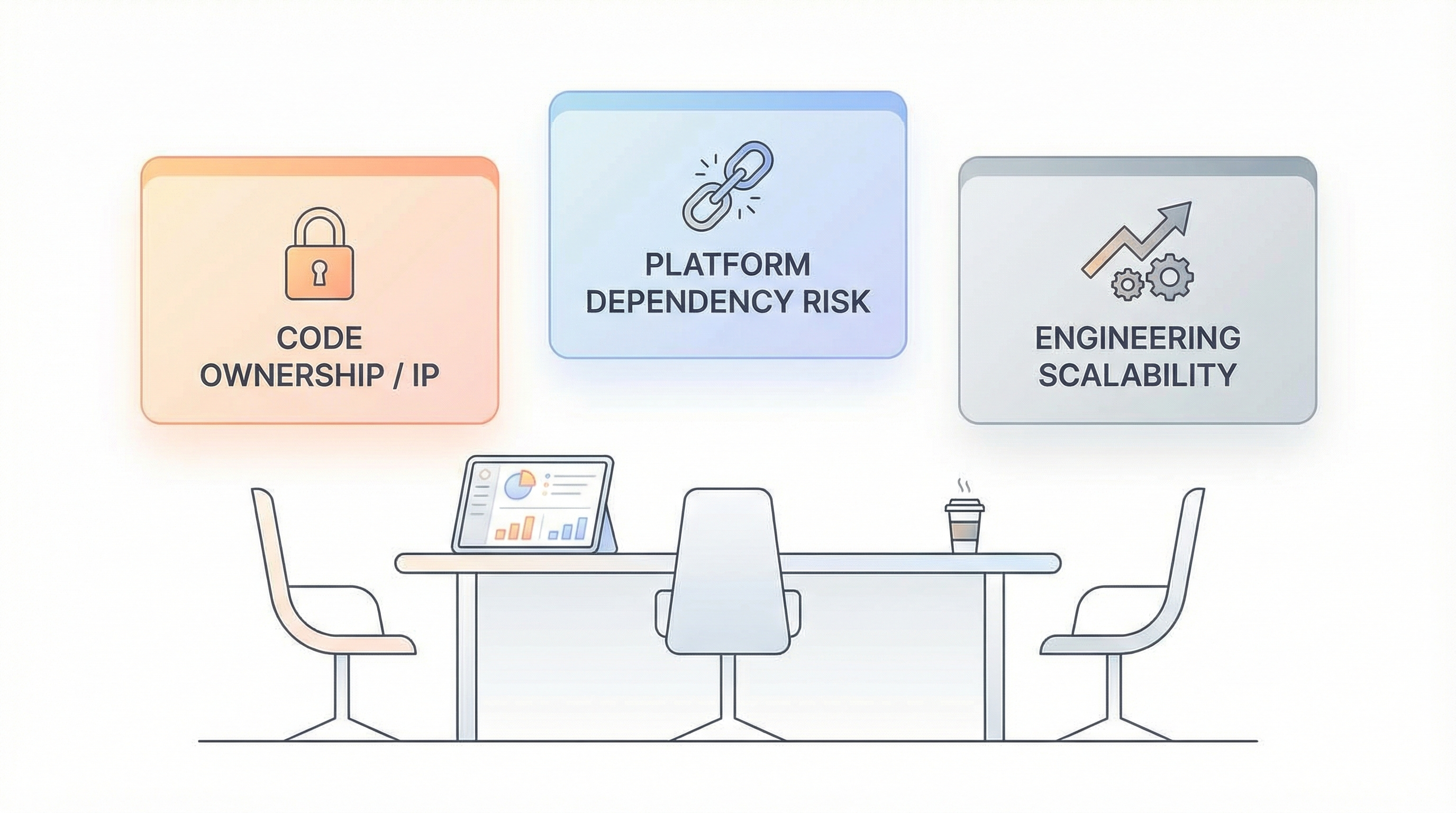
The Three Questions That Kill Deals
When investors dig into a Bubble-based startup, three questions consistently derail conversations:
Question 1: "Who owns the intellectual property?"
With traditional code, you own your software outright. You can sell it, license it, modify it, deploy it anywhere. It's an asset on your balance sheet.
With Bubble, you own... your Bubble account. The code that makes your application run? That's Bubble's proprietary system. Your "application" is a configuration of their platform, not an independent asset.
This isn't a technicality. In an acquisition, it's the difference between buying a product and buying a dependency.
Question 2: "What happens if Bubble changes pricing, policies, or shuts down?"
Smart investors model risk scenarios. A business built entirely on a third-party platform carries concentration risk. If Bubble raises prices (they have), changes terms (they have), or faces financial trouble (any company can), your entire operation is affected.
"what happens if someone hacks your account and deletes your app? Is there any way to recover from this?" — mc3digital, Bubble Forum
This question isn't paranoid—it's fiduciary responsibility. Investors are stewards of their LPs' capital. Backing a startup that could be rendered worthless by a third party's decision is a risk they have to weigh carefully.
Question 3: "How do you hire and scale the engineering team?"
Building a 50-person engineering team with Bubble developers is theoretically possible but practically challenging. The talent pool is limited. The ceiling on what you can build is constrained. The frameworks for scaling engineering organizations don't translate directly.
When investors model your Series B or C, they imagine you hiring senior engineers from Google, Stripe, and Airbnb. Those engineers don't know Bubble—and many won't want to learn it.
The Deals That Didn't Close
Let's move from theory to reality. Here's what's actually happening in the market:
"my client lost a multi-million contract because they ran into compliance issue and they needed the code and DB to be run locally" — vascolucci, Bubble Forum
A multi-million dollar contract. Lost. Not because the product was bad. Not because the team was weak. Because the code couldn't leave Bubble's servers.
This wasn't a theoretical concern—it was a legal requirement the client couldn't waive. And Bubble, by design, couldn't accommodate it.
"I've lost over 90% of potential clients because I couldn't offer code ownership." — Orbit, Bubble Forum
Read that number again: 90%. This is from Orbit, a five-year Bubble veteran who built their business on the platform. Nine out of ten potential clients walked away when they learned they couldn't own their code.
These aren't edge cases. They represent a systemic pattern. As startups mature and engage with sophisticated buyers—whether investors, enterprise clients, or acquirers—code ownership becomes a gating criterion.
What Different Investor Stages Actually Care About
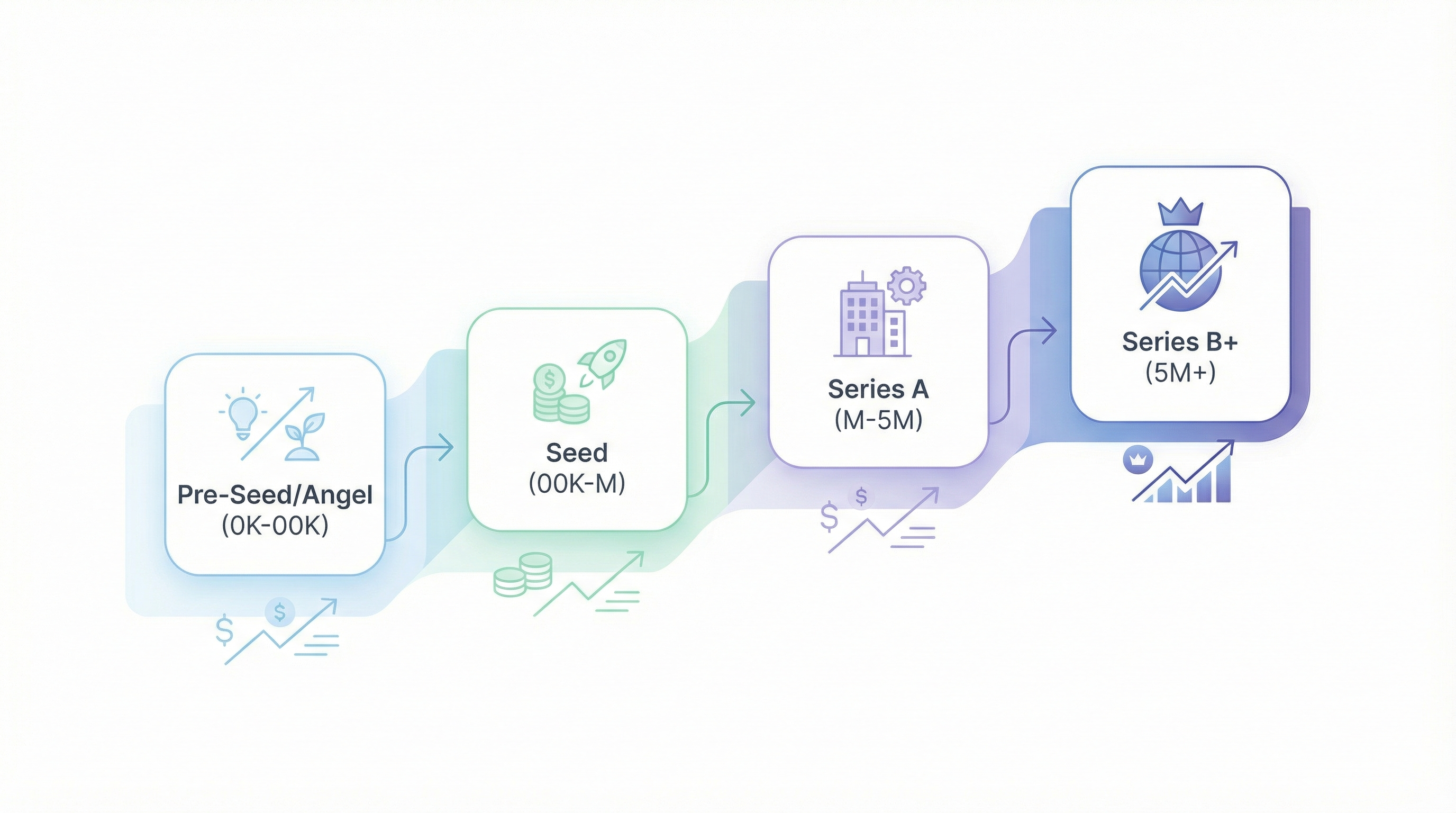
The investor concern isn't uniform across stages. Understanding the nuances helps you navigate conversations more effectively.
Pre-Seed / Angel ($50K - $500K)
What they care about: Can you execute? Can you acquire users? Is there a market?
Code ownership concern: Low to moderate. Most angels understand that you do whatever it takes to validate the idea. They've seen hundreds of pivots—the tech stack matters less than the founder and the opportunity.
What you'll hear: "How quickly can you iterate?" "Can you ship the features you need?" "What's your runway?"
Navigate it by: Emphasizing speed and capital efficiency. "We built and validated in 8 weeks for $15K instead of 8 months for $150K." Frame Bubble as a strategic choice, not a limitation.
Seed ($500K - $3M)
What they care about: Product-market fit signals, team composition, path to Series A.
Code ownership concern: Moderate. Seed investors are modeling your Series A. They know A-round investors will ask harder questions. They're evaluating whether you'll clear those hurdles.
What you'll hear: "What's the plan for the technical foundation?" "When do you bring in engineering leadership?" "How does this scale?"
Navigate it by: Having a clear technical roadmap. Either you're planning to migrate before Series A, or you have compelling reasons why Bubble serves your specific use case long-term. Vagueness kills you here.
Series A ($3M - $15M)
What they care about: Proven scalability, professional management, clear path to market leadership.
Code ownership concern: High. Series A due diligence is thorough. Technical diligence typically involves actual engineers evaluating your architecture. They will identify platform dependency as a risk.
What you'll hear: "Walk us through your technical architecture." "What's your infrastructure cost model at 10x scale?" "How would we execute a technology audit for an acquirer?"
Navigate it by: This is typically where Bubble-based companies need to have either already migrated or be actively migrating. The conversation is harder to finesse at this stage.
Series B and Beyond ($15M+)
What they care about: Market dominance, category leadership, path to IPO or major acquisition.
Code ownership concern: Decisive. At this stage, institutional investors, board members, and future acquirers all need to see a technology asset they can underwrite. Platform dependency is generally disqualifying.
The Enterprise Client Problem
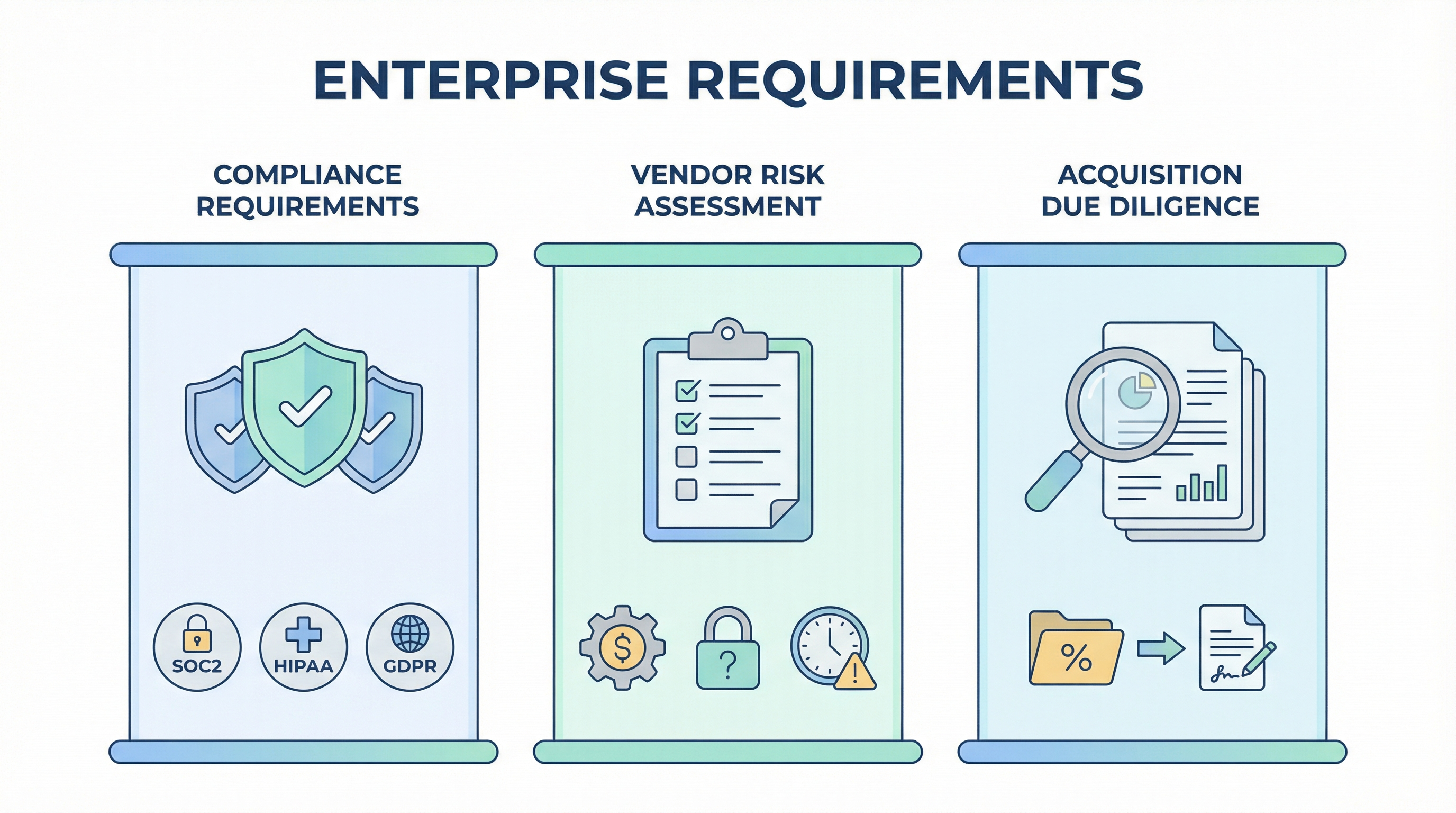
Investors aren't the only stakeholders who care about code ownership. As your startup matures, enterprise clients run similar evaluations.
Compliance Requirements
Large organizations have procurement processes. Those processes often include technical requirements you can't negotiate away:
- SOC 2 Type II: Requires demonstrable control over your infrastructure and code
- HIPAA: Health data may need to be stored in specific configurations
- GDPR data residency: European customer data must remain in Europe
- FedRAMP: Government contracts require specific security certifications
- PCI DSS: Payment processing has infrastructure requirements
"my client lost a multi-million contract because they ran into compliance issue and they needed the code and DB to be run locally" — vascolucci, Bubble Forum
When compliance requires code to run locally—on-premises, in a specific geography, or within a controlled environment—Bubble can't accommodate. The contract goes to a competitor who can.
Vendor Risk Assessment
Enterprise procurement teams evaluate vendor risk systematically. When they assess a Bubble-based application, they see:
| Risk Factor | Traditional Code | Bubble Application |
|---|---|---|
| Code ownership | Vendor owns | Locked to Bubble's platform |
| Platform dependency | Multiple providers | Single provider |
| Migration path | Standard tooling | Complex extraction |
| Business continuity | Self-contained | Platform-dependent |
| Audit compliance | Direct access | Indirect through Bubble |
For large contracts, these risk assessments often determine vendor selection before features are even evaluated.
Due Diligence for Acquisition
Here's a scenario that plays out more often than you'd think:
A larger company wants to acquire your startup. Your product fits perfectly into their ecosystem. The initial conversations are enthusiastic. They move to technical due diligence.
Their engineering team writes a report. The conclusion:
"The target's technology is not an asset—it's a platform configuration. Acquiring this company means acquiring the obligation to rebuild the product from scratch or maintain indefinite dependency on Bubble's platform. We recommend reducing the offer by 40-60% to account for technology risk and rebuild costs."
That's not hypothetical. That's the calculus acquiring companies actually run.
The Real Question: What Stage Are You At?
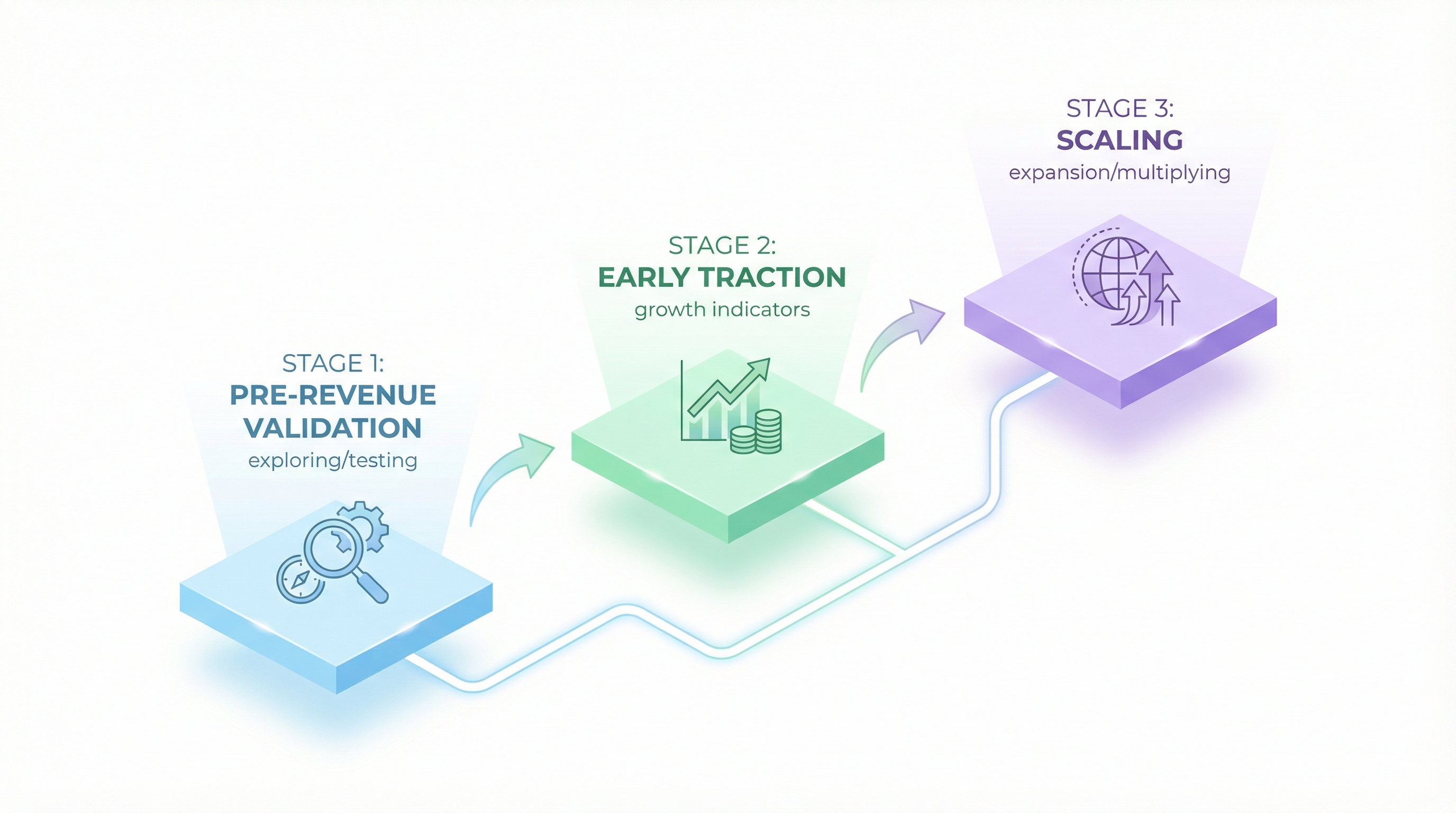
Here's the framework that actually helps founders make this decision:
Stage 1: Pre-Revenue Validation (Stay on Bubble)
If you're still searching for product-market fit, Bubble is often the right choice. The speed advantage outweighs the eventual constraints. Your goal is to validate, not to optimize for an exit that may never happen.
Signs you're here:
- Under $5K MRR
- Still iterating on core product
- Haven't talked to institutional investors yet
- User count in hundreds, not thousands
Recommendation: Focus on validation. Code ownership is a problem for later.
Stage 2: Early Traction (Plan the Migration)
You've found product-market fit. Revenue is growing. You're starting to think about raising capital or pursuing larger clients.
Signs you're here:
- $5K - $50K MRR
- Core product is stable
- Beginning investor conversations
- Starting to hit Bubble's limitations
Recommendation: Start planning. Get migration quotes. Understand timelines. You don't necessarily need to migrate now, but you need to know what it takes so you can speak confidently in investor meetings.
Stage 3: Scaling (Execute the Migration)
You're raising Series A, pursuing enterprise clients, or planning an exit. Code ownership has become a gating factor.
Signs you're here:
- $50K+ MRR
- Active fundraising or M&A conversations
- Enterprise pipeline building
- Bubble costs or limitations constraining growth
Recommendation: Execute the migration. The cost of migration is typically far less than the value at risk from lost deals.
The Numbers: What Migration Actually Costs vs. What It Saves
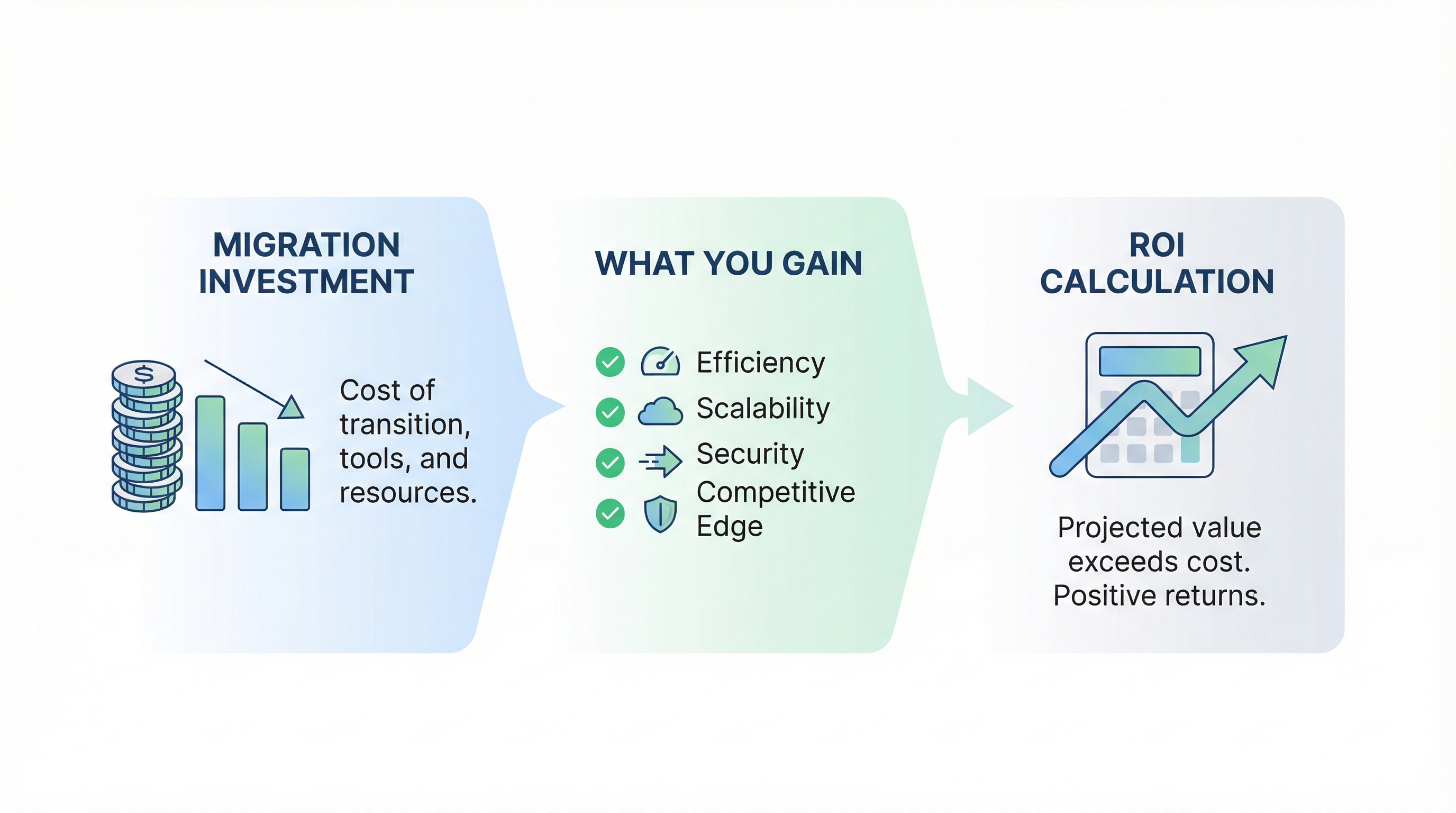
Let's quantify this so you can make informed decisions:
Migration Investment
| App Complexity | Typical Cost | Timeline |
|---|---|---|
| Simple (5-10 pages) | $1,500 - $2,500 | 1-2 weeks |
| Medium (10-30 pages) | $2,500 - $5,000 | 2-4 weeks |
| Complex (30+ pages) | $5,000 - $15,000 | 4-8 weeks |
What You Gain
Code ownership: Your application becomes an asset, not a dependency. You can sell it, license it, deploy it anywhere.
Investor conversations: The "tech stack" question becomes easy. You own your code, you use modern frameworks, you can hire from the global talent pool.
Enterprise eligibility: Compliance requirements become checkboxes instead of blockers.
Acquisition math: Buyers acquire a technology asset rather than a platform configuration.
Reduced ongoing costs: Bubble costs at scale often run $500-$2,000/month. Equivalent custom code hosting typically runs $50-$300/month.
The ROI Calculation
Let's model a specific scenario:
Current state:
- $30K MRR business on Bubble
- Paying $529/month for Bubble Professional
- About to raise Series A
- One enterprise deal ($100K/year) stalled due to code ownership requirement
Migration investment:
- $5,000 one-time migration cost
- 3 weeks of timeline
Value unlocked:
- Series A proceeds without tech stack discount: $3M+ (vs. reduced valuation or no deal)
- Enterprise deal closes: $100K/year
- Annual hosting savings: ~$4,800/year
- Acquisition premium: Potentially millions in future exit value
The $5,000 migration pays for itself multiple times over from the enterprise deal alone. The impact on fundraising and eventual exit is potentially transformative.
How to Talk About Bubble in Investor Meetings
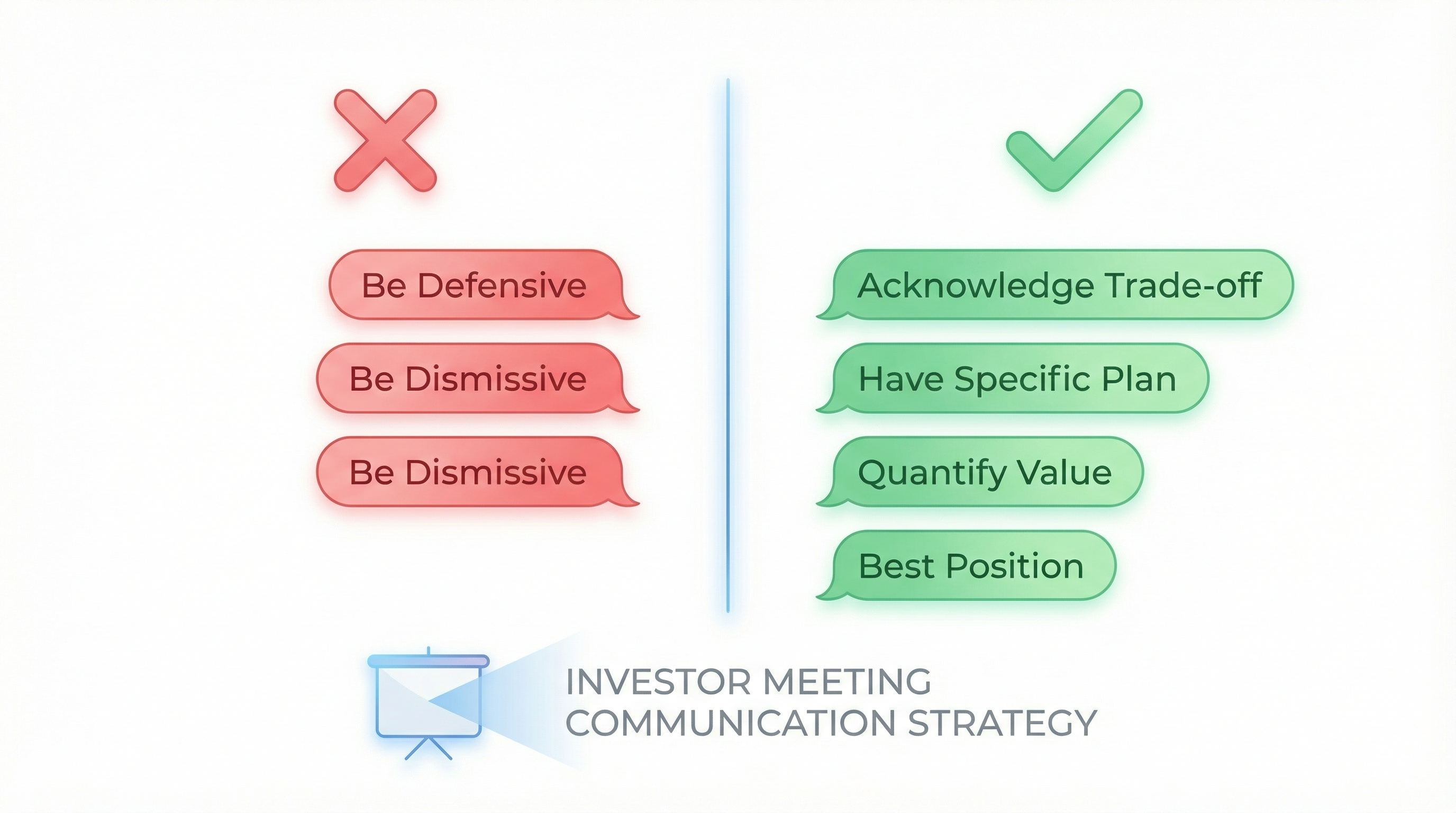
If you're still on Bubble when you enter investor conversations, here's how to handle it effectively:
Don't: Be Defensive
Saying "Bubble is actually really good" or "code ownership doesn't matter" signals that you don't understand investor concerns. They've heard these arguments before.
Don't: Be Dismissive
Saying "we'll figure it out later" or "we'll migrate when we need to" suggests you haven't done the analysis. That's a red flag.
Do: Acknowledge the Trade-off
"We made a deliberate choice to build on Bubble for our initial validation. It let us move from idea to $30K MRR in six months with minimal capital. Now that we've validated product-market fit, we're executing our technical evolution plan."
Do: Have a Specific Plan
"We're migrating to Next.js and Supabase over the next 8 weeks. Here's our timeline, here's our team, here's our budget. We'll have code ownership before this round closes."
Do: Quantify the Value
"Building on Bubble saved us approximately $150K in initial development costs and 6 months of timeline. That allowed us to validate faster and raise this round at a higher valuation than if we'd built custom from day one."
The Best Position
The best position in an investor meeting is:
"We used no-code strategically to validate fast. We migrated to custom code once we had traction. We now own our technology, can hire from the full talent pool, and have cleared all compliance requirements."
This narrative shows strategic thinking, execution capability, and awareness of what matters at different stages.
The Path Forward
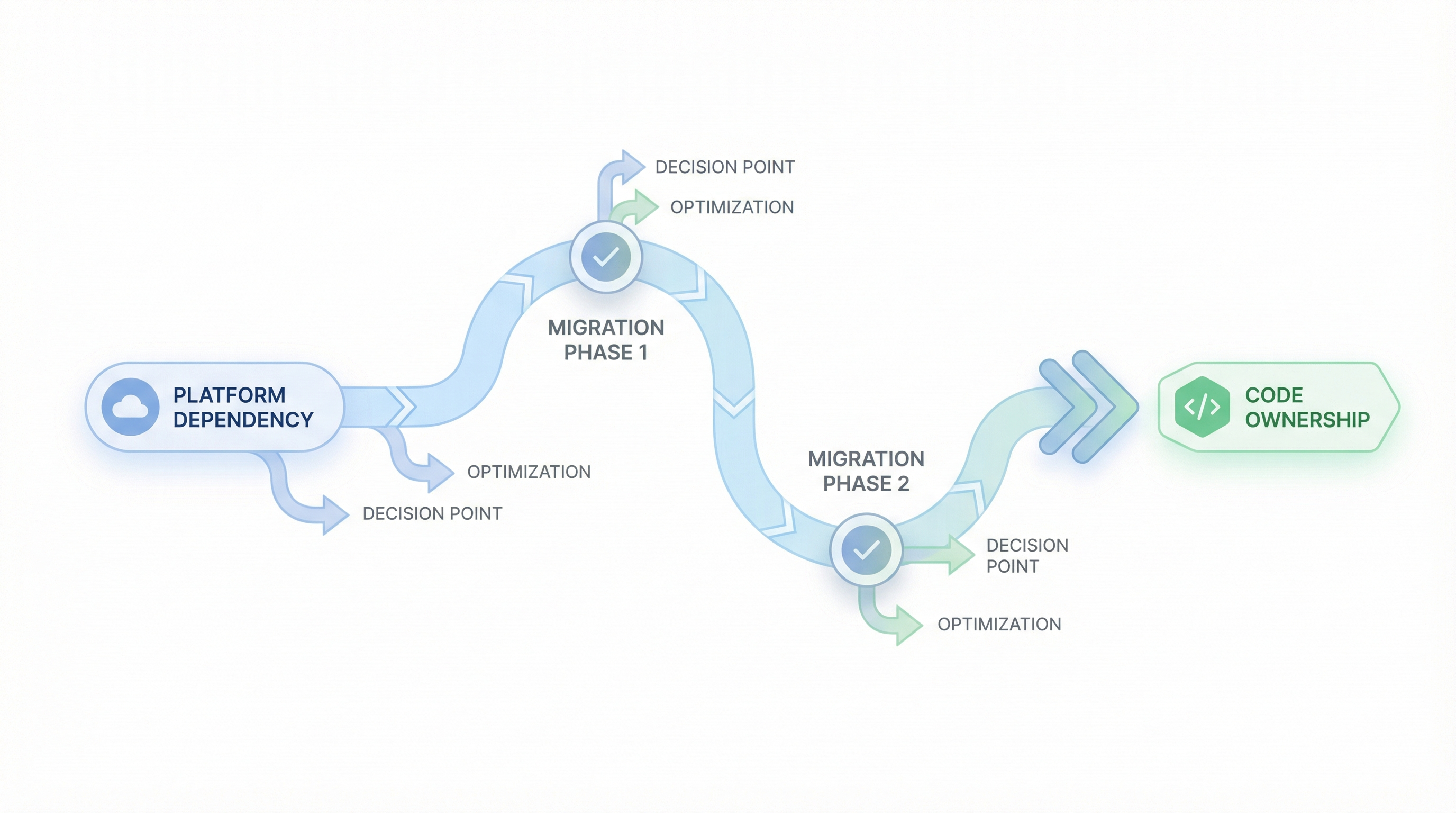
Here's the honest assessment:
If you're pre-revenue: Bubble is probably still right for you. Don't solve problems you don't have.
If you're generating revenue: Start planning the migration. Get quotes, understand timelines, have the conversation with your team.
If you're raising Series A or pursuing enterprise: Execute the migration now. The cost of migration is tiny compared to the value at risk.
If you've already had deals fall through: You already know what you need to do.
The founders who navigate this successfully share one characteristic: they treat migration as a strategic evolution, not an emergency retreat. They plan early, execute confidently, and use the transition to strengthen their overall technical foundation.
"I never thought of going back to bubble" — munaeemmmm, Bubble Forum (months after migrating)
That's the sentiment from founders who've made the transition. Not regret. Not nostalgia. Relief that the code ownership question is answered forever.
What Comes Next
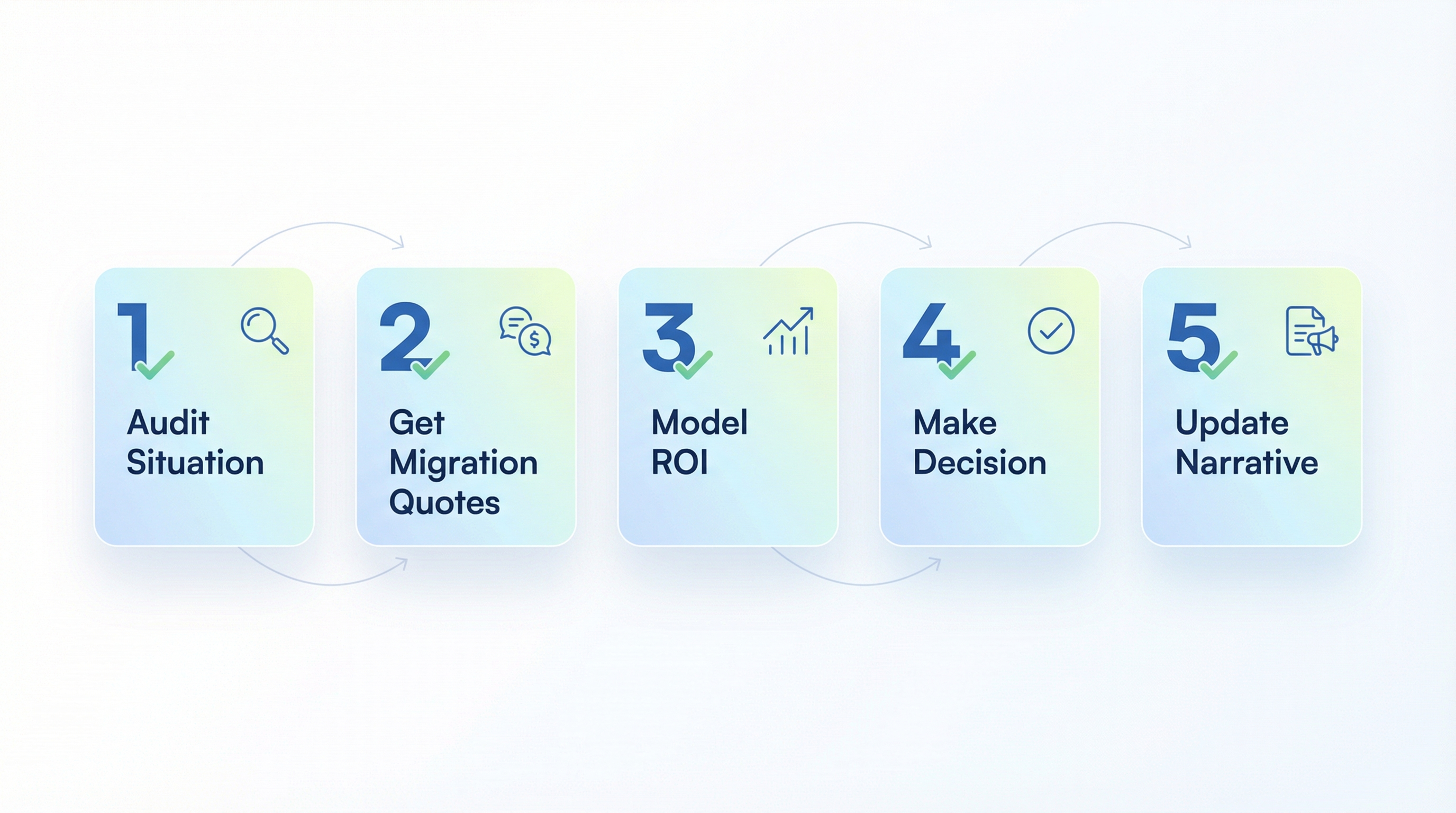
If you're facing investor conversations with a Bubble-based product, here's your action plan:
-
Audit your current situation: What stage are you at? What's actually blocking you?
-
Get migration quotes: Understand the real cost and timeline. You might be surprised how accessible it is.
-
Model the ROI: What deals are you not pursuing because of code ownership? What's your Series A valuation with vs. without platform dependency?
-
Make the decision: Either you're staying on Bubble with clear rationale, or you're migrating with clear timeline.
-
Update your narrative: Whatever you decide, be able to articulate it confidently. Investors respect founders who've done the analysis.
The code ownership problem doesn't solve itself. But it's also not insurmountable. Thousands of founders have navigated this transition—from platform dependency to code ownership, from investor hesitation to enthusiastic backing.
The question isn't whether investors care about Bubble. They do.
The question is what you're going to do about it.
Frequently Asked Questions
Do all investors care about code ownership?
No. Angel investors and very early-stage funds often don't prioritize it. They're betting on the founder and the opportunity, not the current technology. As you move to Series A and beyond, code ownership becomes increasingly important. By Series B, it's essentially required.
Can I raise a Series A on Bubble?
It's possible but significantly harder. You'll face more scrutiny, may receive lower valuations, and will exclude some funds entirely. Most successful Series A companies either migrate before raising or have migration actively underway with clear timelines.
What if my app is too complex to migrate?
Every Bubble app can be migrated—it's a question of cost and timeline. Complex applications with sophisticated workflows, heavy plugin dependencies, and large databases require more investment. But "too complex to migrate" is usually a fear rather than a reality. Get specific quotes.
How long does migration take?
Simple applications: 1-2 weeks. Medium complexity: 2-4 weeks. Complex applications: 4-8 weeks. Very large enterprise applications: 2-3 months. These timelines are for complete migration to production-ready custom code.
Will my users notice the migration?
Done properly, migration should be invisible to users—or actually improve their experience through better performance. The transition typically happens over a weekend or planned maintenance window. Your data migrates completely; users log in as usual.
What tech stack should I migrate to?
Most Bubble-to-code migrations land on React/Next.js frontend with Node.js backend and PostgreSQL database. This stack has the largest talent pool, best tooling, and clearest path for scaling. Other options include Vue/Nuxt, Ruby on Rails, or Python/Django depending on your team's expertise.
Ready to talk migration?
Get a free assessment of your Bubble app. We'll tell you exactly what to expect — timeline, cost, and any potential challenges.